
The International Union for Conservation of Nature listed it as an endangered species in 2002
Year-old fossil evidence from a cave in Bethlehem
State of Indian’s Birds 2020 – Range, Trends and Conservation status report: Sparrow population in India stable for 25 years, not threatened by mobile towers
UK’s Royal Society for the Protection of Birds reports, sparrow population in India down by 60 per cent
According to website All About Birds, the sparrow was first sighted in 1851 in Brooklyn, New York
———————————————————————————————————-
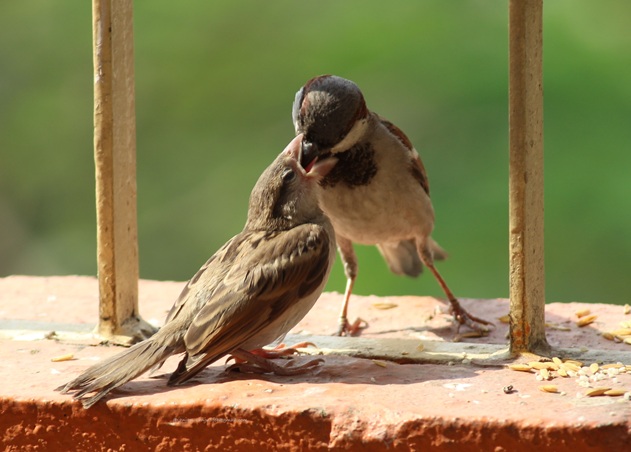
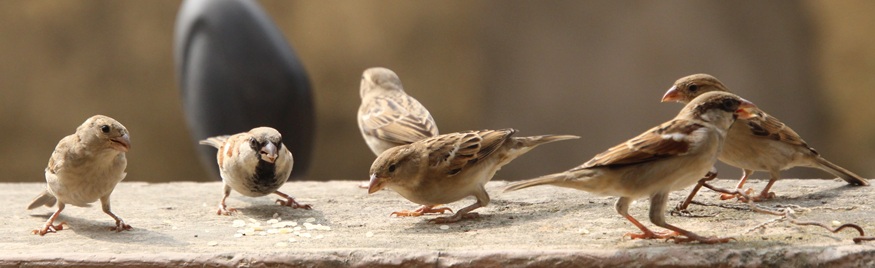
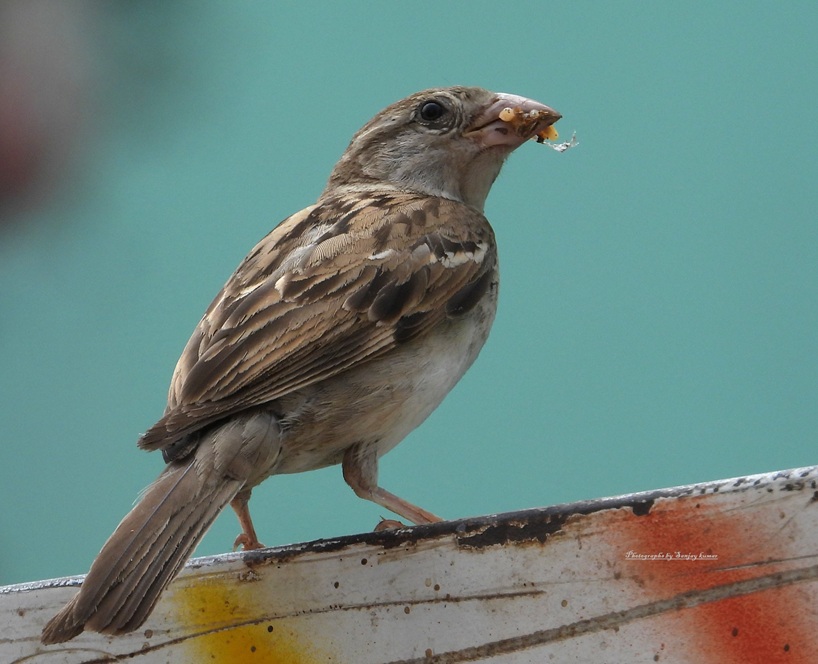
by sanjay kumar / The mention of the small-sized beautiful house sparrow reminds one of childhood. It was once inhabited by humans in their backyards. But ignoring the environment, the city and then the village, turning into concrete jungles, have taken them away from us. There was a time when in every house-yard the grain was hit by the soup, then the sparrow came from the furrow to eat the grain that fell after being hit and flew away from the furrow after eating the grain. We used to play as kids, trying to catch it. Put the rice under the basket, trap it and after catching it, put the colour on the sparrow and blow it away. When the bridegroom came, he recognized her and called her my sparrow and welcomed her with a cheerful clap.
The common sparrow is known by the names house sparrow, Spanish sparrow, cynd sparrow, russet sparrow, dead sea sparrow, and tree sparrow, but among these house sparrows are called house sparrows. It is found in villages and towns. No matter where the human builds a house, the sparrow will soon be there to stay. The sparrow is a bird of the small pasta family. Statistics show that there has been a decline in the population of the sparrow, a small cute bird that chirps in courtyards around the world. Talking about scientific studies, it has been proved that house sparrows follow humans everywhere and they cannot live where humans do not live. Year-old fossil evidence from a cave in Bethlehem suggests that house sparrows shared space with early humans.
According to a 2018 report by the Royal Society of London, the bond between humans and sparrows dates back 11,000 years and the starch-friendly nature of the house sparrow tells us the story of its evolution. There are many reasons behind the decline in sparrow population There are many reasons behind the decline in sparrow population which are constantly being researched. The reasons behind the decline in sparrow population have been attributed to increasing habitat crisis, dietary deficiencies, extensive use of pesticides in farms, lifestyle changes, climate change, pollution, hunting, disease of sparrows, and radiation from mobile phone towers.
A growing habitat crisis is the loss of a habitat. Sparrows require specific types of habitats to nest, feed, and roost in, and these habitats are being destroyed. The loss of habitat conducive to sparrow breeding is also believed to be a major reason for the decline in its numbers. The rapid conversion of khaprail / pallet habitats into concrete jungles has changed the picture. Habitat suitable for breeding in cities is negligible. That is why it is visible in some areas of the same city and not in others. People involved in sparrow conservation are taking the initiative to give sparrows a breeding habitat by building artificial houses. Sparrows are also coming here to lay eggs. The crisis is not much in many villages, thatched and mud houses are still there. Urbanization, agriculture, and industrial development have all contributed to the loss of sparrow habitats. Lack of diet / extensive use of pesticides is the major factor that has led to the decline in sparrow population. Pesticides can directly affect sparrows by killing them or indirectly by reducing the availability of their food sources.
Sparrows are also exposed to pesticides through their prey, which can accumulate in their bodies and cause serious health problems. Climate change also plays a role in the decline of sparrow populations. Sparrows are sensitive to changes in temperature and rainfall, and their breeding and migration patterns can be disrupted by extreme weather events. Changes in the distribution, abundance, temperature, and rainfall of their food sources from climate change can cause their populations to decline. There was a time when in every house-yard the grain was hit by the soup, then the sparrow came from the furrow to eat the grain that fell after being hit and the grain flew away from the furrow. However, the sparrow is still coming into many homes today. Somewhere it is being protected, somewhere it is not. Packaged food, orchards and gardens have been destroyed.
Earlier every house had a garden in the front and back. Where there used to be trees like Jhurmut Wala, Lemon, Shami Pomegranate, etc. on which they used to live. The sparrow is being harmed by increasing air and noise pollution day by day. Another reason for the decline in the sparrow population is hunting. Sparrows are hunted by a variety of predators, including birds of prey, snakes, and mammals. They are also vulnerable to nest predation, which occurs when their eggs or chicks are taken by predators. At some places, the buffaloes are hunting. Another threat to the sparrow is disease.
Sparrows can be affected by avian influenza, West Nile virus, and salmonellosis diseases. Radiation from mobile phone towers and sparrow mobile phone towers has also been thought to be a major factor in sparrow population decline. But the State of Indian’s Birds 2020 – Range, Trends and Conservation Status, on page six of its report, clearly states that there has been no convincing evidence to support the mobile phone tower argument that radiation affects sparrow breeding. That is, there is a misconception that mobile phone towers pose a threat to sparrow breeding. Still, if someone thinks that the radiation from the mobile phone tower is having an effect, you can go to the website of the Ministry of Telecommunications and complain. The sparrow population has remained stable in India for 25 years, although the country’s six metros, Bengaluru, Chennai, Delhi, Hyderabad, Kolkata, and Mumbai, have seen a decline in numbers, while the rest of the cities have seen stable numbers. Thus, it is not extinct in India. However, the situation is not good. Many have disappeared or migrated from the town and village. The report claims that the sparrow population has remained stable in India for the past 25 years. However, due to its conservation awareness, the Delhi government has declared the 2012 and the Bihar government has declared the 2013 sparrow as the state bird.
The question of conservation comes up on World Sparrow Day on 20 March every year. Sparrows are friends of humans and help farmers. Sparrows stay with humans and give them happiness and peace. It protects the crops from the insects that grow in the farm-yard-fruit-flower-vegetable. But, we have distanced ourselves from it. The situation is that it appears somewhere, nowhere. One is in the city, the other is not. One is in the village, the other is not. One is in the neighborhood, the other is not. In such a situation, the sparrow says, right now I am alive, existence is in danger, take the initiative to save me, promise to fill the house-yard with noise and happiness. The International Union for Conservation of Nature listed it as an endangered species in 2002.
The sparrow is one of the most threatened birds after the vulture. Noted environmentalist Mohammed E Dilawar, associated with the Bombay Natural History Society, started sparrow conservation in 2008. Today this world has reached many countries. By the way, the first introduction of the sparrow to the world was made by the Brooklyn Institute of America in 1851. Some people do not keep food and water in the houses because when it comes, birds like pigeons also start coming with it and they spread filth. Many people let the wet clothes dry and the bird sits on the clothes and makes it dirty.
A lot has changed in people’s lives. Be it a multi-storeyed building or a common building, people pack open areas or balconies with glass. It is dangerous, the sparrow comes flying and hits the mirror or pecks on it seeing its shadow in it, it feels that there is another sparrow there and in such a case it gets injured. Sparrows are an important part of many ecosystems and play an important role in seed dispersal and pest control.
Sparrow conservation is in full swing across India, including in the state of Delhi and Bihar, where it has been declared the state bird. This is the reason why sparrows can be seen from Kashmir to Kanyakumari. Over the years, people engaged in sparrow conservation, government-non-government institutions, NGOs, every common and special person, have made the sparrow return home through sparrow photo exhibition, painting competition, donation house, nest, water pot distribution, as well as awareness campaigns. Nationwide awareness seems to be driving the sparrow back home. People have completed this initiative by keeping food and water, planting a nest (box) and giving a little love to the little sparrow. The sparrow has also kept its promise and has made its return felt by coming to people’s houses – courtyards, balconies, rooftops. The advantage of sparrow conservation was that other birds also began to be protected. By keeping the grain water and putting the box, the other bird also started coming and seeing. However, unless people join this campaign, it will not be possible to benefit the birds. Believe me, when you see them drinking water from your pot and the bird coming to the tree box you have planted, you will have a lot of peace of mind. So, come on, save the oh-so-sparrow, save the grain-water, plant the box and the tree.
* *